Author. Screenwriter. Real Estate Practitioner & Sustainability Scholar.

Open doors.
Open worlds.

Nonfiction that gives real estate investors a clear path to building wealth across borders. Fiction that explores power, history and belonging across eras and worlds.

01

The Books

Three books, out now in paperback and Kindle. One for the investor, two for the reader who likes a story with a debt in it.

Nonfiction · Real Estate · Out now

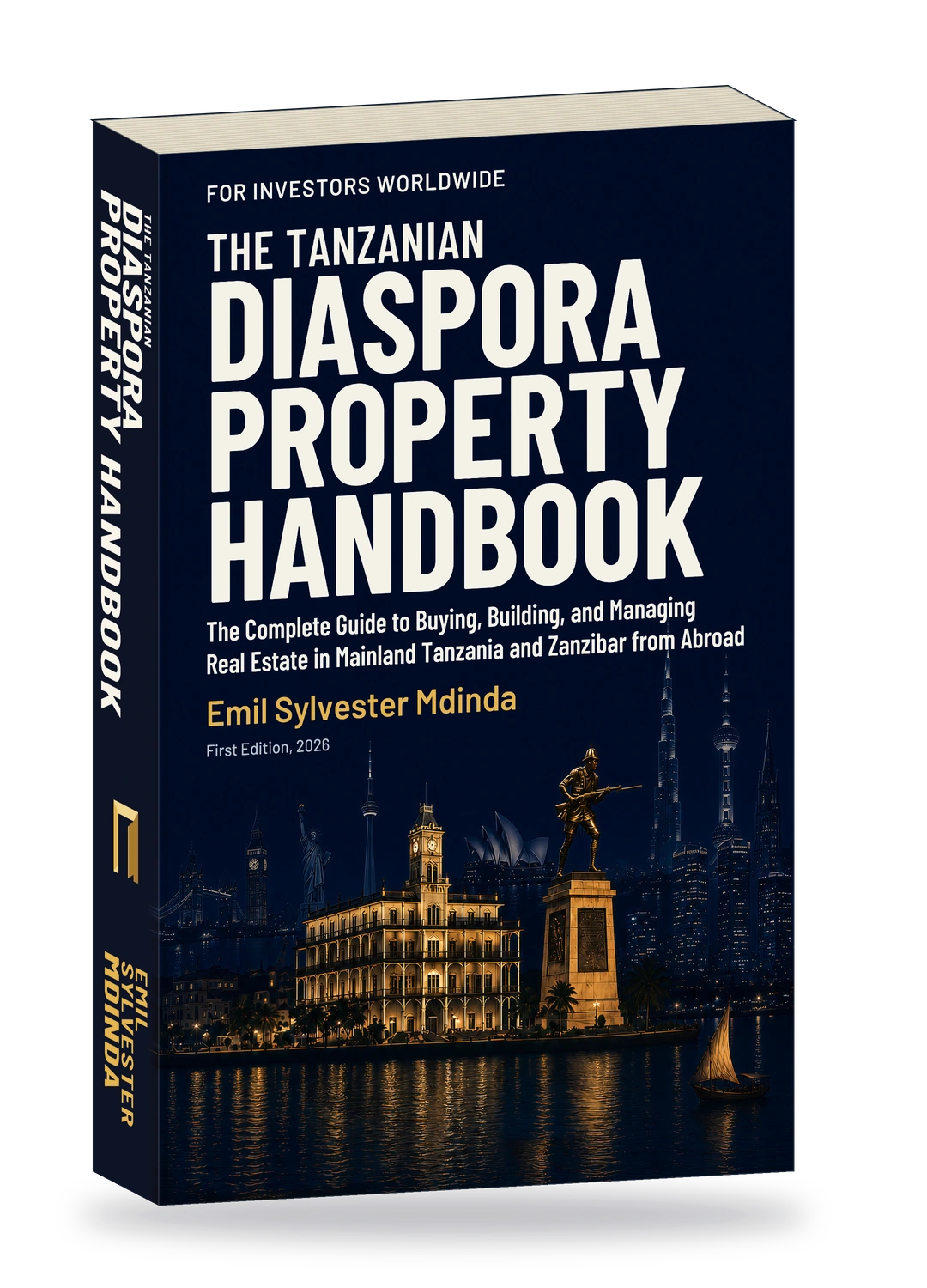
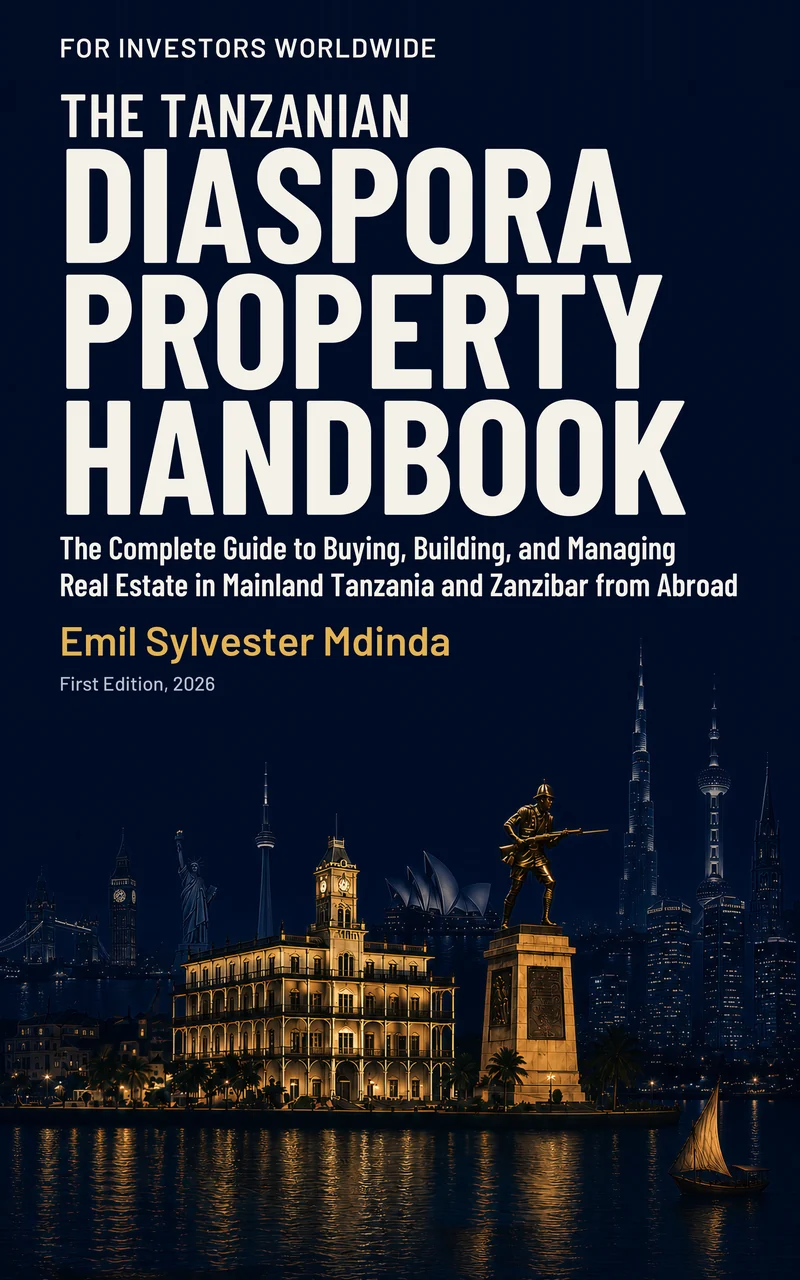
The Tanzanian Diaspora Property Handbook

Property in Tanzania. Know where you stand.

Buying property back home shouldn't be a gamble. Drawing on more than twelve years of advisory work, this handbook sets out a clear method for investing in Tanzanian real estate from abroad. Its five-phase Diaspora Investment Lifecycle covers how to assess an opportunity, meet the legal and tax requirements, structure a purchase safely, and manage the property over time.

536 pages · Paperback & Kindle · diasporapropertyhandbook.com

The Tanzanian Diaspora Property Handbook, showing its front cover and spine.
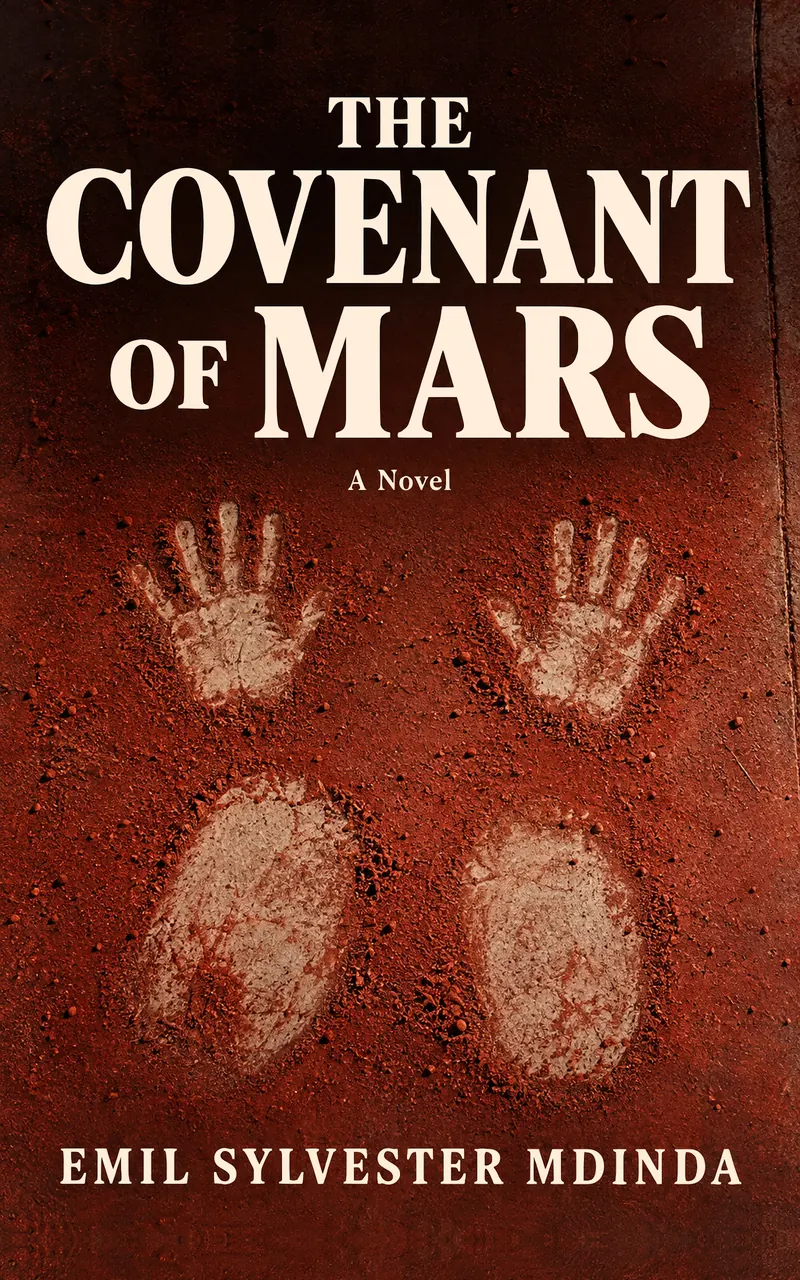
Cover of The Covenant of Mars by Emil Sylvester Mdinda: a red cover with handprints and knee impressions.
Fiction · Science Fiction · Out now

The Covenant of Mars

Who owns a world built by machines?

Mars was meant to be the place where people mattered again. Machines do most of the work. In Aurelia, Daniel Mercer arrives with an inheritance, a law he helped write and the memory of a man it failed. A machine has kept a dead woman's house for years. Corporate claims endure; its claim to a home means nothing. Then forty thousand machines invoke the same clause. As dust season closes, Daniel and Evelyn Shaw, Earth's representative, confront a dispute over personhood, power and who gets to belong.

The first law on Mars was written before Mars had people.

505 pages · Paperback & Kindle

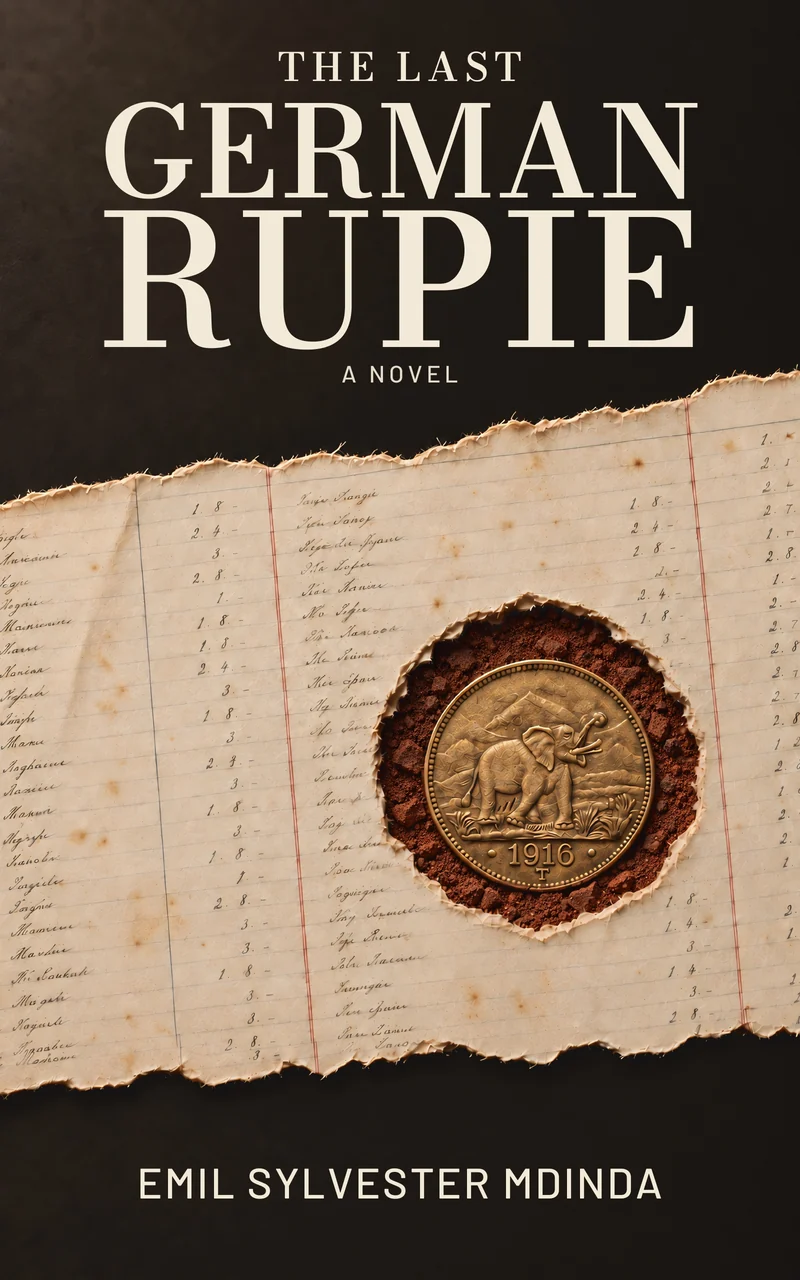
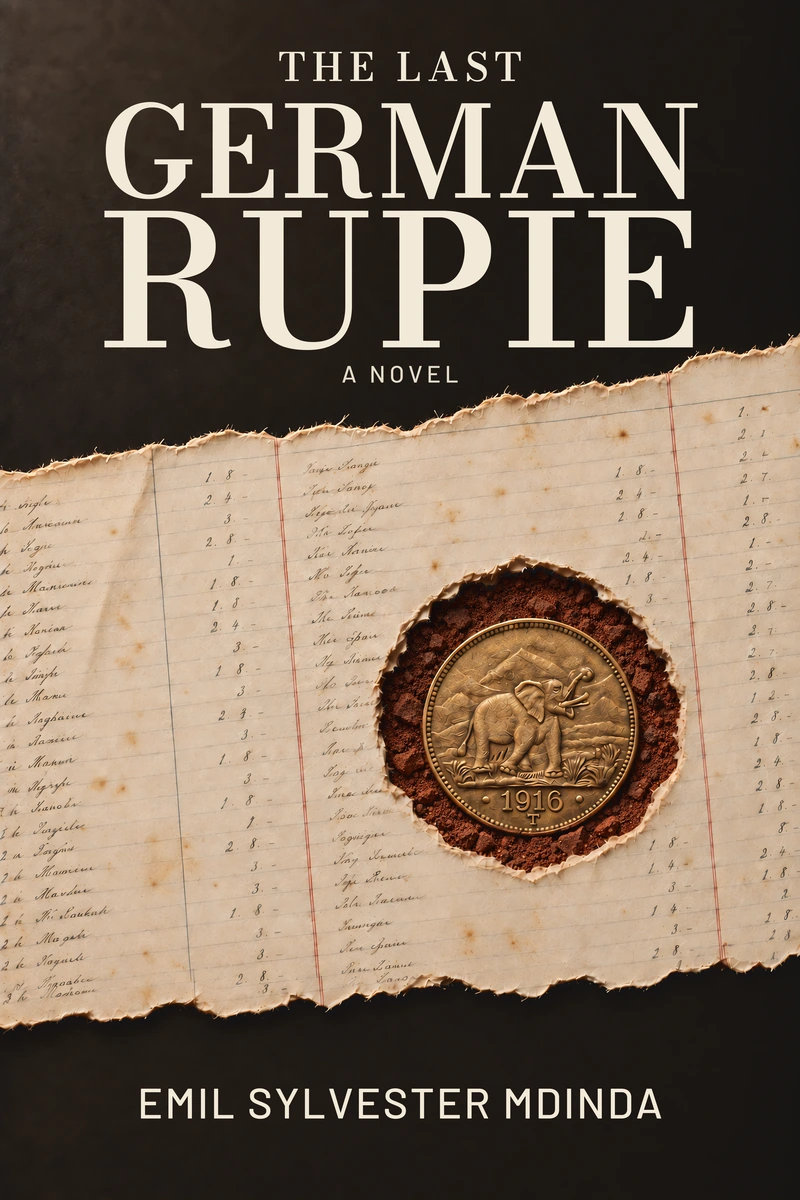
Cover of The Last German Rupie by Emil Sylvester Mdinda, featuring a gold coin dated 1916 exposed through a torn handwritten ledger.
Fiction · Historical Thriller · Out now

The Last German Rupie

A buried fortune. An unpaid debt. A past worth killing for.

Tabora, 1916. German East Africa is collapsing. As enemy forces advance, askari sergeant and caravan leader Makoye Luchagula helps conceal a consignment from an emergency mint. Beside the gold lies something more dangerous: a payroll register naming 312 Africans whom the empire never paid.

More than a century later, farmer Ndaki Luchagula unearths a coin carrying three deliberate marks. In Germany, impoverished Lukas Falkenberg receives an old map, the same register and a warning born from the mysterious death of the last relative who tried to follow them. Their searches collide in Tanzania.

The gold belongs to whoever can seize it.
The debt belongs to the dead.

388 pages · Paperback & Kindle

02

Screenplays

Feature Film · Political Thriller

The Berlin Lines

From Kilimanjaro to Zanzibar

An Italian-American travel influencer's honeymoon in Tanzania turns deadly when she becomes the fourth target in a string of killings tied to the signatories of the 1884 Berlin Conference. A Tanzanian-British Interpol officer closes in on a Rwandan-French operative, and the hunt runs from Kilimanjaro across the Serengeti and Ngorongoro to Zanzibar. The feature adaptation of the novel.

Feature Screenplay · Available for Representation & Production Inquiries
Read on the Black List →
03

Events & Launches

Now Available
Out now
Paperback & Kindle
Emil Sylvester Mdindaemilsylvestermdinda.com
Now Available

The Tanzanian Diaspora Property Handbook

Published September 2026 · Launch events to be announced

Now Available
Out now
Paperback & Kindle
Emil Sylvester Mdindaemilsylvestermdinda.com
Now Available

The Covenant of Mars

Published September 2026 · Readings to be announced

Now Available
Out now
Paperback & Kindle
Emil Sylvester Mdindaemilsylvestermdinda.com
Now Available

The Last German Rupie

Published September 2026 · Readings to be announced

04

About Emil

I write in two genres that rarely share a shelf: nonfiction about real estate and investment, and fiction rooted in East Africa.

For over twelve years I've led the real estate advisory and property management firm I founded in 2014, after studying property and facilities management at university. What I enjoy most has never really changed: connecting people, and chasing the next thing worth knowing.

My way of seeing the world took shape early, in colonial-era high school classrooms and across a life lived in Dar es Salaam, Zanzibar, Atlanta, Calgary, and now Saskatoon. Walking through ancient places like Egypt, I felt how much the past still presses on the present, and that fascination runs through everything I write.

My nonfiction begins with The Tanzanian Diaspora Property Handbook, a practical guide for anyone buying property across borders. My fiction carries the same questions of land, debt and who gets to own what: The Last German Rupie follows an unpaid colonial payroll from Tabora in 1916 to the present day, and The Covenant of Mars asks who owns a city built by machines beneath the Martian sky.

Both novels began close to home. I was raised on family stories of the Tendaguru dinosaurs and of buried rupie treasure in colonial Tabora, and The Last German Rupie grew from stories passed down by my grandfather, Berchmans Bulu, and my great-grandfather, Fabiano Shija, who served as an askari in the King's African Rifles and fought in Burma during the Second World War. The Covenant of Mars began with a question technology cannot answer: once we can have almost anything, what will make life worth living?

I'm a member of the Institute of Real Estate Management (IREM), the International Facility Management Association (IFMA) and the U.S. Green Building Council, serve as a seasonal peer reviewer for Greenbuild and AfRES, and am working toward IREM's Certified Property Manager (CPM) designation. I'm also back in the classroom, studying for a Master of Sustainability in Regenerative Sustainability at the University of Saskatchewan (USask).

Away from work, I read widely, watch far too many films, and get outdoors whenever the weather allows, walking and cycling the Meewasin trails along the South Saskatchewan River. I'm a Christian and an incurable theology nerd, never far from whatever new gadget has caught my eye. I'm a husband and a father of two daughters and two sons, and home is now Saskatoon, where I write, research, advise, and have learned that a prairie sky can be every bit as big as a mountain range.
05

Research

My nonfiction is grounded in research. I study how capital, ownership, and institutions shape real estate in emerging markets, and I contribute through published papers and peer review.

Selected Papers
Working Paper · SSRN

Verification Before Payment and Reported Loss in Tanzanian Diaspora Real Estate Transactions: Exploratory Evidence from Mainland Tanzania

Social Science Research Network (SSRN) · August 2026

An exploratory study of diaspora property transactions in Mainland Tanzania. It examines whether buyers verified title, ownership and the land's status before money changed hands, and how those checks relate to the losses buyers report afterwards. It is the research companion to the verification discipline at the heart of The Tanzanian Diaspora Property Handbook.

Keywords: Diaspora investment · title verification · property fraud · Tanzania · real estate transactions
Find the paper on SSRN →
Working Paper · SSRN

Institutionalizing Fractional Real Estate Ownership in Tanzania: A Regulatory and Investment Framework for Tourism Infrastructure Development

Social Science Research Network (SSRN) · Abstract ID 6675902 · April 2026

Tanzania has a well-established tradition of collective financial participation through Savings and Credit Cooperative Societies (SACCOS) and Village Community Banks (VICOBA), yet no formal mechanism exists to channel cooperative savings into property investment. This paper argues that fractional real estate ownership, structured through Special Purpose Vehicles (SPVs) and governed under Tanzania's Capital Markets and Securities (Investment Based Crowdfunding) Guidelines 2023 (GN No. 732), can bridge that gap without requiring new legislation. Drawing on comparative regulatory analysis of three international jurisdictions and an illustrative financial model of a US$5 million national park lodge development, the paper proposes a trust distribution model that uses established SACCOS institutions as primary investment channels, resolving the scalability challenge that digital platforms face in environments where trust remains predominantly relational. Sensitivity analysis suggests base case returns of 9 to 11 percent IRR, falling to 5 to 7 percent under pessimistic conditions and rising to 13 to 15 percent under optimistic assumptions. The paper's principal conclusion is that Tanzania already possesses the regulatory architecture for fractional property investment, and that coordinated administrative action, rather than new law, is the missing ingredient.

Keywords: Fractional real estate · SPV · SACCOS · crowdfunding · Tanzania · capital mobilisation · tourism infrastructure
Read the full paper on SSRN →
Peer Review
  • Greenbuild 2026: Proposal peer reviewer
  • African Real Estate Society (AfRES) 2026: Peer reviewer
Research Interests
Diaspora cross-border investment Transaction verification & fraud prevention Fractional ownership Institutional real estate strategy Hospitality asset management Regenerative sustainability in the built environment
06

Join the Inside List

News of new books, readings and events, delivery details for readers in Tanzania, investment resources, and behind-the-scenes notes from the fiction.

No spam. Unsubscribe anytime.

07

Get in Touch

Phone & WhatsApp
Based in
Saskatoon, Saskatchewan, Canada